Full re-roofing for all Derby property types. From 1960s concrete tile estates in Normanton and Chaddesden to Victorian slate terraces near Friar Gate — properly stripped, battened and relaid with a 10-year guarantee.
A full roof replacement in Derby costs £4,500–£13,000 depending on size and material — concrete tile, Welsh slate or GRP flat sections. Derby Roofing Experts provide survey-based fixed quotes, a 10-year guarantee, and all scaffold and waste removal included. Call 0133 240 5131 for a free survey.
A roof reaches the point where individual repairs become uneconomic — when you're patching the same sections every few years, when the underlay has failed across large areas, or when the battens have deteriorated beyond the point of holding new tiles reliably. For most Derby properties built in the 1960s with concrete interlocking tile, that point is arriving now. A full strip and relay, rather than repeated repair visits, is the better long-term investment.
We carry out full roof replacements across all of Derby's housing eras. For the large Mackworth estate and similar 1960s–70s developments, concrete interlocking tile replacement is straightforward and can typically be completed in 3–4 days. For Victorian and Edwardian properties near Friar Gate and Darley Abbey, we source matched reclaimed Welsh slate to preserve the character and value of the property. Conservation area properties receive material advice before any work begins.
Replacement Cost Guide
3-Bed Semi (Concrete Tile)
£4,000–£6,500
Strip, new felt and battens, concrete interlocking tile
3-Bed Semi (Slate)
£6,000–£10,000
Strip, new felt and battens, Welsh slate or equivalent
Detached House
£8,000–£15,000
Dependent on size, pitch and material specification
Victorian Terrace (Slate)
£5,500–£9,000
Reclaimed or new Welsh slate, repoint stacks
What's Included in Every Re-Roof
Complete strip of old tiles and underlay, inspection and replacement of damaged battens, new breathable roofing membrane, full re-tile in agreed material, repointing of ridge and verges, lead dress on any chimney flashings, and a written 10-year workmanship guarantee. Skip hire and waste disposal are included in all quotes.
Customer Reviews
What Do Derby Homeowners Say?
★★★★★
“Full re-roof on our 1960s semi in Spondon. They stripped it, replaced some rotten battens we didn't know about, and re-tiled in four days. The quote was exactly what we paid.”
Phil K. · Spondon, Derby
★★★★★
“Had three quotes for our Victorian terrace near the Cathedral Quarter. Derby Roofing were the only ones who properly surveyed the roof before quoting and recommended reclaimed slate. The finish is fantastic.”
Helen R. · Cathedral Quarter, Derby
★★★★★
“Roof had been patched so many times it was time for a full replacement. Derby Roofing did the whole job, including the chimney flashing, in under a week. Very tidy, very professional.”
Graham A. · Mickleover, Derby
The Survey Before the Quote
Every roof replacement starts with a proper survey from a scaffold-secured working platform, not an assessment from the ground. We need to check the condition of the roof structure — rafters, ridge board, purlin hangers, wall plates — because structural defects discovered mid-strip cost significantly more to correct than if identified and priced upfront. We also check the existing battens and whether the underlay has failed or is worth retaining. A quote given without getting onto the roof is not a reliable quote.
On Derby's older estate stock, the survey regularly turns up additional items: rafter tails that have decayed at the eaves due to years of gutter overflow, damaged fascia boards that need replacing before the new guttering can be fitted, or chimney stacks that need repointing as part of the work programme. These are always quoted separately and explained — nothing appears on the final invoice that wasn't on the original quote.
Material Selection for Derby Properties
For post-war properties across Derby's estates, concrete interlocking tile is the standard specification. The choice within that category — profile, colour, manufacturer — affects price and longevity. We don't specify the cheapest available tile; we specify tiles from established manufacturers with proven track records and proper guarantees. The tile is the weatherproofing system for the next 40–60 years; saving £200 on a cheaper product that fails in 15 is false economy.
For Victorian and Edwardian properties across Friar Gate, Darley Abbey and the Cathedral Quarter, Welsh slate is the correct material. New Welsh slate is available, but the colour and texture profile differs from 19th-century material on prominent elevations. Reclaimed Westmorland or Welsh slate, sourced to match the neighbouring properties, is the specification we recommend and use for period re-roofs. The premium over new slate is modest; the difference in finish and conservation compliance is significant.
What the 10-Year Guarantee Actually Covers
Our 10-year workmanship guarantee covers all labour and materials used in the re-roof against defect. It specifically covers: water ingress through the new tile surface, ridge and verge failure, flashing failures at abutments and chimney stacks, and batten-nail pull-through on new battens. It does not cover storm damage, which is an insurance matter, or problems caused by subsequent alterations to the roof. The guarantee is transferable to new owners if the property is sold within the 10-year period.
Scaffold Planning and Neighbour Management
A re-roof on a Derby terrace or semi-detached property requires scaffold that may partially overhang a shared access, boundary wall, or neighbouring property. We handle all scaffold licensing requirements, including local authority road closure notices where a scaffold extends over the pavement, and we inform and coordinate with neighbouring properties before erection. The scaffold period for a standard Derby semi re-roof is typically 7–10 days from erection to strike. On completion, the site is fully cleared — all old tile, felt, batten waste and skip contents removed — before the scaffold comes down and the job is signed off.
Honest advice
Do You Actually Need Roof Replacement?
A full re-roof is a major investment, and the honest question is whether your Derby roof genuinely needs one or whether it has repairable years left. The answer is in the pattern of failure, not a single fault.
Slates or tiles slipping across the whole roof, not just one spot
Repeated repairs that no longer hold — every storm brings another failure
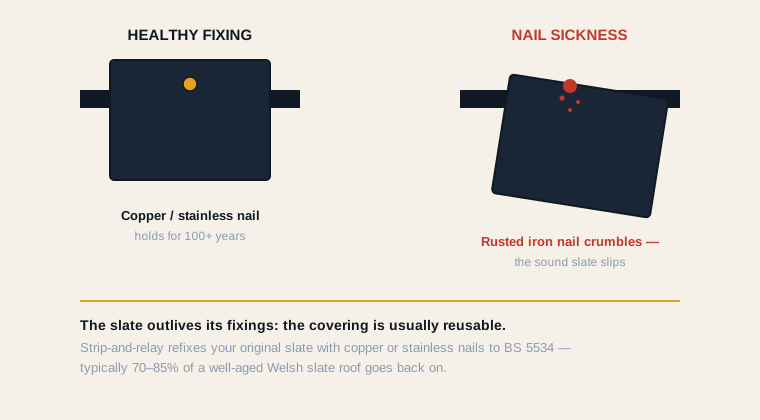
Widespread nail sickness on a Victorian slate roof (Normanton, Peartree)
Concrete tiles delaminating or spalling across a post-war estate roof
When it is not the answer: If failures are localised and the deck and structure are sound, a targeted repair or partial re-cover is the honest answer and we will tell you so rather than sell a re-roof Read the full guide.
Roof Replacement — technical referenceThe process
From First Call to Sign-Off
1. Survey and timber inspection
We assess the covering, battens, underlay and structural timbers, and check for issues specific to your roof's age and Derby stock type.
2. Detailed written quotation
A full fixed-price specification — materials, membrane, battens, lead, scaffold, waste and building control where the 25% threshold applies.
3. Scheduling and scaffold
We book the job, arrange the scaffold, and give you a clear start date and duration.
4. Strip and re-roof
The old covering comes off, defective timber is replaced, new breathable membrane and treated battens go on, and the roof is re-covered with new or reclaimed materials, with all lead renewed.
5. Completion and sign-off
Scaffold struck, site cleared, building control certificate where applicable, and the 10-year workmanship guarantee handed over.
Timescales
Job Durations at a Glance
Job
Typical duration
Terraced house re-roof
4–6 days
3-bed semi re-roof
5–8 days
Detached house re-roof
1.5–2.5 weeks
Strip and relay (reusing tiles)
4–7 days
Add scaffold erect/strike
1 day each end
Extended wet or freezing spells can pause a re-roof — the roof is always left weathertight overnight and in bad weather.
Access
Getting Safely onto Derby Roofs
A full re-roof always needs scaffold for safe working and access — it is included and itemised in the quote, never a hidden extra. Scaffold is specified for: the entire job — a re-roof is never done off ladders - always itemised in your written quote, never a hidden extra, and we arrange it.
Derby's mix of Victorian terraces, post-war estates and city-centre stock means access varies street by street, from tight terraced frontages to open estate roads. Pavement scaffold and skip permits go through Derby City Council; allow a few working days on streets like Sadler Gate, the Wardwick, Friar Gate where space is tight.
Pricing
Roof Replacement Prices in Derby
Job
Typical range
Notes
Terraced house re-roof
£5,000–£8,500
Concrete tile
3-bed semi re-roof
£5,800–£10,000
Concrete tile, all-in
Welsh slate re-roof (3-bed)
£9,500–£16,000
Natural slate
Strip and relay (reuse tiles)
25–40% less
Where tiles are sound
Detached house re-roof
£10,000–£20,000+
Size and material dependent
What moves the price
Roof size and complexity — hips, valleys and dormers add labour
Material — concrete tile is cheapest, Welsh slate the dearest
Whether tiles can be reclaimed and relaid or must be renewed
Scaffold duration on a larger or two-storey property
Whether building control sign-off and insulation upgrade are triggered
Worked example: A concrete-tile re-roof on a 1960s semi in Mackworth — around £7,200 including scaffold, new membrane, battens, renewed lead and waste.
Staged payments on re-roofs — a materials payment when they arrive on site, the balance on completion. Nothing up front before materials. VAT included; empty-property jobs may qualify for reduced 5% VAT.
Covering DE1, DE21, DE22, DE23, DE24 and surrounding postcodes.
Guarantee
Your Guarantee, Explained
The full re-roof carries a 10-year workmanship guarantee in writing, transferable if you sell; tiles, slates and membranes carry manufacturer warranties (often 20–50 years) on top.
Covered: workmanship for 10 years, in writing, transferable if you sell.
On top: manufacturer warranties on materials (terms vary by product).
Not covered: storm or impact damage - that is an insurance matter, and we will document it for your claim.
If a fault appears in covered work, we come back and put it right. No quibbling, no re-charge.
Questions about your roof? Call us free on 0133 240 5131 — no call-out fee, no obligation.
Good to know
Disruption, Mess & Weather
A re-roof means scaffold up for the duration, some noise during strip and battening, and a skip on site — we protect your garden and drive, sheet the loft, and clear all waste on completion. You do not need to stay home for external work - we just need power and access agreed in advance.
Re-roofing runs through most of the year; we never strip more than we can make weathertight in a day, and temporary covering goes on if weather turns. Derby's inland Midlands position brings genuine winter frosts and Derwent-valley humidity that slows drying.
FAQ
Frequently Asked Questions
A typical 3-bed semi costs £4,000–£8,000 to re-roof depending on pitch, materials and access. Larger detached properties or those requiring matched Welsh slate run £8,000–£15,000. We survey first and give you a fixed, itemised quote with no hidden additions.
Most 3-bed semis in Derby take 3–5 days. Victorian terraces requiring sourced reclaimed slate can take a day or two longer. We'll give you a firm completion estimate in your quote.
Most like-for-like re-roofs in Derby don't require planning permission under permitted development. Properties in conservation areas — parts of Darley Abbey and around Friar Gate — may have constraints on materials. We'll advise on this as part of your free survey.
Yes. Skip hire and waste disposal are included in every replacement quote. We leave the site clean at the end of each day and remove all waste on completion.
Yes in most cases. We work section by section and ensure the roof is weathertight at the end of each working day. For properties where the full roof needs stripping simultaneously — unusual on standard pitches — we discuss the programme in advance.
For post-war properties on Derby's concrete tile estates, replacement with modern concrete interlocking tile is the standard and most cost-effective choice. For Victorian and Edwardian properties near Friar Gate and Darley Abbey, matched Welsh slate maintains both the character and the value of the property. We advise on material choice as part of every free survey.
A properly installed concrete tile roof in Derby should last 40–60 years before replacement is needed. Welsh slate correctly laid lasts 80–100 years. GRP flat roofs carry a 25-year material warranty. The main variable is maintenance — regular ridge and gutter checks extend life significantly.