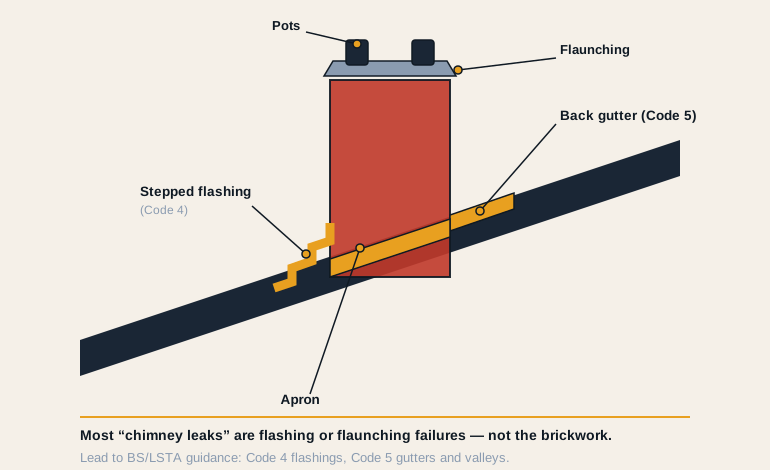
Repointing, lead flashing repair, stack rebuilds and pot replacement across Derby. Specialist experience with Victorian and Edwardian period properties around Friar Gate and the Cathedral Quarter.
Chimney repairs in Derby cost £300–£3,500 — from repointing and lead flashing to full stack rebuilds. Derby Roofing Experts use lime mortar on period properties as standard and provide a 10-year guarantee. Call 0133 240 5131 for a free quote.
Derby's Victorian and Edwardian housing stock around Friar Gate, the Cathedral Quarter and Darley Abbey generates a consistent demand for chimney repair work. The exposed position of chimney stacks — projecting above the roofline and fully exposed to the weather from all sides — makes them the most vulnerable part of any period property. Derby's frost cycles are particularly damaging: water works into open mortar joints over summer, freezes and expands through winter, and each cycle opens the joint a little further.
Lead flashing failure is the primary cause of chimney-related roof leaks in Derby. On north-facing stacks — common on the terraced rows running east-west through Normanton and the Victorian streets off Uttoxeter Road — the lead barely warms in winter and cycles continuously through freeze-thaw without the thermal recovery that more sheltered stacks get. Re-dressing or replacing lead flashing is usually sufficient unless the flashing has been repeatedly patched with mastic, in which case full lead replacement gives a better long-term result.
Chimney Repair Pricing Guide
Chimney Repointing
£200–£500
Rake out and repoint mortar joints to full stack
Lead Flashing Repair
£200–£450
Re-dress and re-secure existing lead
Lead Flashing Replacement
£350–£650
Full lead strip and relay around chimney base
Stack Rebuild
£800–£2,500
Partial or full stack rebuild in matching brick
Customer Reviews
What Do Derby Homeowners Say?
★★★★★
“Lead flashing around the chimney had been patched with mastic three times by previous owners. Derby Roofing stripped the lot and fitted new lead properly. No leaks since, and it looks right for the period of the house.”
Lisa F. · Friar Gate, Derby
★★★★★
“Chimney stack was leaning slightly and the pointing was crumbling on our Victorian terrace near Uttoxeter Road. They repointed the full stack and replaced the pots. Solid job.”
David H. · Normanton, Derby
★★★★★
“Had a damp patch on the chimney breast and couldn't work out the cause. Derby Roofing found it within 10 minutes — a cracked flaunching on top of the stack. Fixed same day.”
Sue M. · Allestree, Derby
The Flaunching Problem
The flaunching is the sloped mortar that sits at the top of the chimney stack, bedding the chimney pots and sealing the junction between the pot and the brickwork below. It's exposed on all sides to wind, rain, frost and UV, and it's one of the first elements to fail on any chimney stack. Cracked or partially collapsed flaunching is a direct route for water into the chimney — it runs straight down the stack and into the ceiling or wall below. Flaunching repair is a separate job from stack repointing, and both should be assessed on any chimney inspection.
We renew flaunching in a flexible mortar that accommodates the thermal movement of the pot and stack junction. Standard cement flaunching is brittle and cracks within a few winters; a properly specified flexible mix lasts significantly longer. All flaunching work includes inspection of the pots for fractures — a cracked pot is a route for water and should be replaced at the same time as flaunching renewal.
When to Rebuild Rather Than Repair
A chimney stack can be repointed many times through its life and still be structurally sound — that's normal maintenance. A stack that needs rebuilding has one or more of the following: significant lean or displacement visible from the ground, severe brickwork deterioration where the brick face has spalled away, internal flue damage identified by a sweep's CCTV, or structural failure at the stack-roof junction. Rebuilding is a significant cost — £800–£2,500 depending on height and complexity — but a leaning stack that falls creates considerably more damage and cost than a planned rebuild.
Working at Height — How We Access Chimney Stacks Safely
Safe chimney work requires either full scaffold from ground level or specialist chimney access equipment. The approach depends on the height of the stack above the ridge — anything more than approximately 3–4 metres above the ridge line requires full scaffold for safe working. We assess access requirements before quoting and include all access costs in the fixed price. A quote that doesn't mention access is not a complete quote.
Chimney Stack Assessment for Unused Flues
A significant proportion of Derby's period housing stock has chimney stacks serving flues that haven't been used since central heating was installed. An unused flue still needs weather protection at the top — an open pot allows rain ingress, which saturates the internal flue lining and causes damp patches on the chimney breast inside. The correct solution is a purpose-made ventilated cap that closes the pot against rain while allowing airflow to prevent condensation in the flue. Capping with a solid cover or mortar is not appropriate — it traps moisture and accelerates internal mortar decay. We assess all pots on every chimney inspection and recommend the correct cap specification for each.
Party Wall Chimneys
On Derby's terraced and semi-detached housing, chimney stacks frequently sit on the party wall between two properties. This creates a specific complication for repair and repointing work: scaffold access from one property's side may not reach the full stack, and any structural work on the stack potentially affects both properties. We advise on party wall notification requirements for any chimney work that involves the party wall structure, and we coordinate access and scheduling with both households where required. A chimney repoint that affects only the facing above your property's roof level generally doesn't trigger party wall requirements; rebuilding or structural work to a shared stack does.
Honest advice
Do You Actually Need Chimney Repairs?
Chimney problems are behind a large share of Derby roof leaks — the stack is the most exposed, most weathered part of the roof. The signs point to whether it needs repointing, re-flashing, or more.
A damp patch on the chimney breast, inside or in the loft
Crumbling or missing mortar between the bricks (Victorian stacks)
Lead flashing lifted, cracked or pulled away from the stack
A leaning stack or cracked, spalled brickwork
Failed flaunching — the mortar bed the pots sit in — cracked or missing
When it is not the answer: If a chimney is redundant and beyond economic repair, removing it below the roofline and making good can be better value than rebuilding — we will lay out both options Read the full guide.
Chimney Repairs — technical referenceThe process
From First Call to Sign-Off
1. Inspection from scaffold or tower
We assess the brickwork, pointing, flashing, flaunching and pots — a proper look, not a guess from the ground.
2. Report and quote
A clear explanation of what has failed and a fixed price to put it right.
3. Scaffold and access
Chimney work needs safe standing time, so appropriate access is arranged and itemised.
4. The repair
Repointing in the correct mortar, flashing renewed in correct-code lead, flaunching rebuilt, pots re-set or capped as needed.
5. Weathertight sign-off
We confirm the stack is sound and weathertight and hand over the guarantee.
Timescales
Job Durations at a Glance
Job
Typical duration
Reflashing a stack
half a day–1 day
Repointing a stack
1–2 days
Rebuild flaunching + reset pots
half a day
Partial stack rebuild
2–3 days
Chimney removal below roofline
1–2 days
Mortar and lead work needs dry conditions to set and dress properly — we schedule around wet spells.
Access
Getting Safely onto Derby Roofs
Chimney work almost always needs scaffold or a secure tower for safe access to the stack — it is itemised in the quote. Scaffold is specified for: virtually all chimney work — the stack cannot be safely worked from a ladder - always itemised in your written quote, never a hidden extra, and we arrange it.
Derby's mix of Victorian terraces, post-war estates and city-centre stock means access varies street by street, from tight terraced frontages to open estate roads. Pavement scaffold and skip permits go through Derby City Council; allow a few working days on streets like Sadler Gate, the Wardwick, Friar Gate where space is tight.
Pricing
Chimney Repairs Prices in Derby
Job
Typical range
Notes
Reflash a stack
£350–£800
Correct-code lead
Repoint a stack
£600–£1,400
Age-matched mortar
Rebuild flaunching + reset pots
£300–£700
Half-day
Partial stack rebuild
£800–£2,000
Per scope
Chimney removal below roofline
£800–£1,800
Incl. making good
What moves the price
Scaffold — nearly always needed for stack work, and itemised
The extent of mortar loss and brick condition
Whether flashing, flaunching and pots all need attention
Lime mortar on heritage stacks costs more than cement
Stack height and position on the roof
Worked example: Reflashing and repointing a Victorian stack on a Normanton terrace — around £1,150 including scaffold.
Staged payment on larger chimney jobs, balance on completion. No large deposit up front. VAT included.
Covering DE1, DE21, DE22, DE23, DE24 and surrounding postcodes.
Guarantee
Your Guarantee, Explained
Chimney repairs carry a 10-year workmanship guarantee; new lead and correct lime or cement mortar are specified for a lasting repair, not a quick smear.
Covered: workmanship for 10 years, in writing, transferable if you sell.
On top: manufacturer warranties on materials (terms vary by product).
Not covered: storm or impact damage - that is an insurance matter, and we will document it for your claim.
If a fault appears in covered work, we come back and put it right. No quibbling, no re-charge.
Questions about your roof? Call us free on 0133 240 5131 — no call-out fee, no obligation.
Good to know
Disruption, Mess & Weather
Scaffold goes up around the stack for the duration; the work itself is contained to the chimney with debris sheeted and cleared. You do not need to stay home for external work - we just need power and access agreed in advance.
Repointing and flaunching need dry, above-freezing conditions to cure; Derby's genuine winter frosts mean we avoid mortar work in hard frost and time it for suitable weather. Derby's inland Midlands position brings genuine winter frosts and Derwent-valley humidity that slows drying.
FAQ
Frequently Asked Questions
Repointing a chimney stack costs £200–£500 depending on height and extent of work. Lead flashing repair runs £200–£450, full lead replacement £350–£650. Stack rebuilds start from £800. All quotes are free and given in writing before work starts.
Crumbling or open mortar joints, white efflorescence staining on the chimney face, damp on the chimney breast inside, or a lean in the stack are all signs. Derby's frost cycles are hard on exposed chimney mortar — a stack inspection every 5–7 years is worth the cost.
Frost expansion and contraction pulls lead away from its chase in the mortar joint. North-facing stacks in Derby are particularly prone — the lead stays cold through winter and cycles through freeze-thaw without the recovery that south-facing stacks benefit from. Regular re-dressing extends life considerably.
Yes. We work on properties in the Darley Abbey and Friar Gate conservation areas and are familiar with the material requirements. Lime mortar is used for repointing on period properties, and we advise on pot and cap styles that meet conservation area guidelines.
If the pointing on the external stack is crumbling, it does not directly affect the safety of using the fireplace — the flue liner is independent of the external brickwork. However, failing external pointing allows water in, which can damage the internal flue and affect draw over time. Get it repointed as a priority maintenance item. If you have concerns about the flue itself, a HETAS-registered sweep should inspect it before use.
We recommend a visual inspection every 5–7 years for Derby properties — more frequently on north-facing stacks where freeze-thaw damage accumulates faster. Properties in Darley Abbey and Friar Gate with original Victorian lime mortar pointing should be checked every 5 years given the age of the masonry.
For stacks up to approximately 4m above the ridge, specialist chimney access equipment can be used without full scaffolding. Higher stacks require scaffold for safe working. We assess access requirements before quoting — the access cost is always included in the quote rather than added afterwards.