What common roof repairs actually cost in Derby — tile by tile, flashing by flashing, with no vague call-out traps. Free quote, fixed price, work that solves the problem.
Tell us the job in 30 seconds. No pushy sales, no call-out fee.
Most Derby roof repairs fall between £150 and £900. Replacing a handful of slipped or cracked tiles costs £150–£400 depending on access and tile type. Renewing a failed lead flashing at a chimney or abutment costs £250–£600. Repairing or relining a valley runs £300–£800. Re-bedding or dry-fixing a failed ridge — one of the most common Derby repairs — costs £600–£1,200 depending on ridge length.
These are honest bands for genuine repairs, and the range within each reflects access and materials rather than guesswork. Where a repair needs scaffold or a tower, that access is included in the fixed price we quote — we don't quote a low repair figure and add access on top afterwards. The Midlands labour rate keeps Derby repair costs slightly below southern England for the equivalent job.
Be wary of Derby roofers advertising a flat call-out fee 'from £49' or similar. That figure covers the visit, not the repair, and the actual work is quoted once they are on your roof and you are already committed. It is a way of getting a foot in the door, not a real price. A proper repair quote is given after seeing the problem, states what the repair is, and holds as a fixed price.
We give Derby homeowners a fixed price for the actual repair before any work starts, including access. If we get on the roof and find the problem is smaller than feared, the price comes down, not up. And if we find it is larger — a single slipped tile that turns out to sit above a failed valley — we tell you before doing anything, with a revised fixed price for you to approve.
On Derby's post-war concrete-tile estates, the most common repair by far is failed ridge mortar — the sand-cement bedding cracks and lets ridge tiles loosen, often misread as needing a whole new roof when it is a £600–£1,200 ridge job. On the Victorian slate terraces, it is slipped slates from nail sickness, individually refixed at £150–£400 until the whole roof reaches end of life.
Chimney flashing failure is common across all Derby housing eras — the lead cracks or the mortar fillet fails and water tracks in, fixed for £250–£600. And blocked or failed valleys, especially on properties under Derby's tree cover in Allestree, Darley Abbey and near the Derwent, cause leaks that are valley repairs rather than roof failures. Diagnosing which of these you actually have is the difference between a £400 fix and an unnecessary £8,000 quote.
Not every Derby roof repair can wait for a scheduled visit. When a tile comes off in a storm and water is entering, or a leak appears above a bedroom ceiling, you need a fast make-safe rather than a fixed-price quote three days later. We provide 24/7 emergency roof repairs across Derby, reaching most addresses within two to four hours to make the roof safe and stop further damage, with no out-of-hours premium added to the call-out.
An emergency make-safe — tarping, temporary sealing, or a rapid tile or flashing repair — typically costs £150–£400 depending on access and the extent of the problem. Once the immediate risk is dealt with, we assess the permanent repair and quote it as a fixed price in the normal way. Where storm damage is involved, we document it for your insurance claim at the same time. The key thing on an emergency is stopping the water fast: a leak left overnight does far more damage to ceilings, insulation and decoration than the roof repair itself, so the quick make-safe usually saves far more than it costs.
There is a false economy that catches Derby homeowners repeatedly: the cheap repair that does not address the actual problem. A mastic smear over a cracked flashing, a dab of mortar on a failing ridge, a single tile replaced where the underlying batten has rotted — these buy a few months and then fail again, and the second and third call-outs, plus the water damage in between, cost far more than doing it properly the first time. The cheapest quote for a repair is often the most expensive over two years.
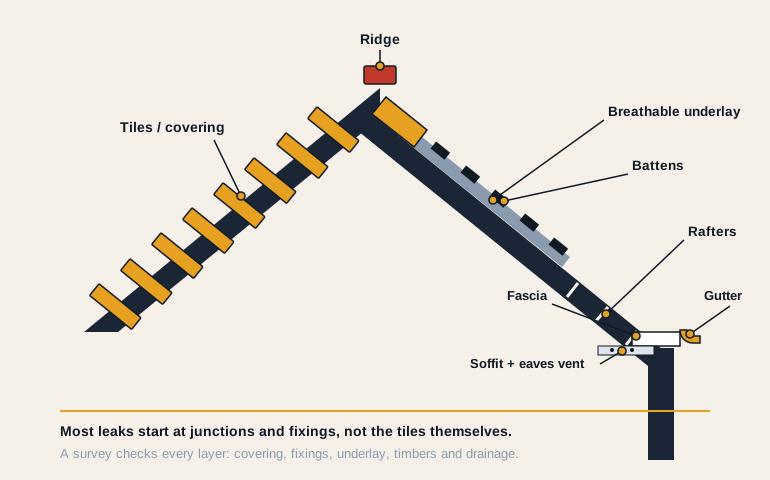
A proper repair fixes the cause, not just the symptom. When we quote a Derby repair, we diagnose why the problem occurred — the flashing failed because the lead had reached end of life, the tile slipped because the nail had corroded, the ridge leaked because the mortar had gone — and fix that cause with the correct materials to a standard that lasts. Correct-code lead flashing lasts 60 to 80 years against a few years for a mastic patch; a proper ridge re-bed or dry-fix lasts decades against months for a mortar smear. It costs a little more upfront and far less over the life of the roof. This is the difference between a repair and a postponement, and on Derby's older roofs in particular it is the distinction that matters most for what you actually pay over time.
The repair you are most likely to need depends on where in Derby you live. On the 1960s–70s concrete-tile estates — Mackworth, Sinfin, Chaddesden, Stenson Fields — ridge and verge mortar failure dominates, because thousands of homes built in the same era are reaching mortar end-of-life together. Re-bedding or dry-fixing the ridge is the standard fix.
In the Victorian and Edwardian terraces of Friar Gate, Normanton and Peartree, slipped Welsh slates from nail sickness are the recurring call. Individual refixing works until the fixings collectively fail across the roof. Chimney flashing failure runs across all of these older properties, where original lead has reached the end of its life.
Under Derby's heavier tree cover — Allestree, Darley Abbey, and streets backing onto the Derwent corridor — blocked valleys and gutters cause the most leaks, as autumn leaf fall backs water up under the tiles. These are cleaning and valley repairs, not roof replacements, and catching them early prevents the internal damage that turns a £300 job into a £3,000 one.
Fixed prices for the actual repair, access included. Confirmed after seeing the problem — if it's smaller than feared, the price comes down.
Correctly installed lead flashing to BS EN 12588 has a design life of 60–80 years, far exceeding the 3–5 year lifespan of the mastic patches often used as a cheaper alternative.Source: BS EN 12588 rolled lead sheet standard
No vague call-out fees. We quote the actual repair after seeing it, access included, and the price holds.
☎ Call 0133 240 5131Thought we needed a new roof — three ridge tiles had come loose. They re-bedded the ridge for £700 instead of the £8k another firm quoted. Honest.
Slipped slates on our Normanton terrace refixed same week. Fixed price quoted before they started, no add-ons.
Leak turned out to be a blocked valley under the trees, not the roof. Cleared and repaired for a fraction of what I feared.
Most Derby roof problems announce themselves as a damp patch, a dropped tile, or debris in the gutters after wind. The question is whether a targeted repair fixes it or whether the roof is telling you it needs more.
When it is not the answer: If more than about a third of the covering has failed, or the same leak keeps returning after repair, repairing tile-by-tile is money wasted Read the full guide.
We find the actual source, not just the stain — leaks often track along timber before showing inside, so we inspect the roof and the loft.
A fixed price for the specific repair, materials named, with no obligation and no call-out fee.
Most repairs are booked within days; genuine emergencies get a same-day make-safe.
We fix the cause with matched materials — a slipped slate refixed, a failed flashing renewed in correct-code lead, a ridge re-bedded or dry-fixed.
We clear debris, leave the site tidy, and hand over the workmanship guarantee in writing.
| Job | Typical duration |
|---|---|
| Slipped or cracked tiles/slates | 1–2 hours |
| Failed flashing or small leak | 2–4 hours |
| Ridge re-bed (single run) | half a day |
| Rear valley rebuild | 2–3 days |
| Multiple-point repair after storm | 1–2 days |
Wet or high-wind days pause work at height — we build weather margin into every booking and never rush a repair in unsafe conditions.
Most Derby repairs run from roof ladders or a tower; scaffold is quoted only where the job needs safe standing time at height. Scaffold is specified for: chimney-side repairs, full valley rebuilds, and anything beyond a day working at height - always itemised in your written quote, never a hidden extra, and we arrange it.
Derby's mix of Victorian terraces, post-war estates and city-centre stock means access varies street by street, from tight terraced frontages to open estate roads. Pavement scaffold and skip permits go through Derby City Council; allow a few working days on streets like Sadler Gate, the Wardwick, Friar Gate where space is tight.
| Job | Typical range | Notes |
|---|---|---|
| Slipped/cracked tile refix | £150–£300 | Per visit incl. access |
| Failed flashing repair | £250–£600 | Correct-code lead |
| Ridge re-bed (single run) | £400–£900 | Or dry-fix option |
| Rear valley rebuild | £600–£1,200 | 2–3 day job |
| Emergency make-safe | £150–£400 | 24/7 call-out, no premium |
Worked example: A rear valley rebuild on a 1930s semi in Chaddesden — roughly £680 including tower access and waste removal.
No deposit on repairs under £500 — you pay on completion. Staged payments on larger jobs, with nothing up front before materials are on site. VAT included in every quote.
Covering DE1, DE21, DE22, DE23, DE24 and surrounding postcodes.
Workmanship on the repaired section is guaranteed for 10 years in writing; any replacement tiles or slates carry their manufacturer warranties on top.
If a fault appears in covered work, we come back and put it right. No quibbling, no re-charge.
A repair is usually a day of quiet ladder work with a small amount of tile debris — we sheet below the work area and clear everything before we leave. You do not need to stay home for external work - we just need power and access agreed in advance.
Repairs run year-round; if rain stops work mid-job we fit temporary weatherproofing the same day so the roof is never left open. Derby's inland Midlands position brings genuine winter frosts and Derwent-valley humidity that slows drying.
Most Derby roof repairs cost £150–£900: slipped tiles £150–£400, lead flashing £250–£600, valley repairs £300–£800, and ridge re-bedding £600–£1,200. Access is included in the fixed price.
No — we quote a fixed price for the actual repair after seeing it, with access included. We don't advertise a low call-out fee and quote the real work once we're already on your roof.
Because some quote only the labour and add access later, while others include scaffold in the price. Ours is a complete fixed price. Vague 'from £X' figures usually exclude the actual repair cost.
On the post-war concrete estates like Mackworth and Sinfin, failed ridge mortar is most common — a £600–£1,200 re-bed, often mistaken for needing a whole new roof. On Victorian terraces, slipped slates from nail sickness.
Often yes — many leaks trace to a slipped tile, failed flashing or blocked valley, repairable for £150–£600. Under Derby's tree cover, blocked valleys cause many leaks that are cleaning jobs, not roof failures.
Yes — we diagnose the actual cause and quote the smallest job that solves it. We'd rather quote a £700 ridge repair than an £8,000 re-roof that isn't needed. Both estimates are provided honestly.
For repairs needing safe access, yes — scaffold or tower hire is included in the fixed price we quote. Small low-level repairs within safe ladder reach don't need it and aren't charged for access.
Free written quotes across Derby and Derbyshire. No obligation, no hidden costs, 10-year guarantee on all work.
0133 240 5131Mon–Fri 8am–6pm · Sat 8am–2pm · 24/7 Emergency