⚡ 24/7 Emergency Roofing — 0133 240 5131
Moss Removal · Derby & Derbyshire

Roof Moss Removal in Derby

Roof moss removal and cleaning across Derby done the right way — careful scraping and biocide treatment, never pressure washing that strips your tiles. Ridge and gutter check included.

📞 Call Now: 0133 240 5131

Tell us the job in 30 seconds. No pushy sales, no call-out fee.

20+
Years Local
127
5★ Reviews
24/7
Emergency
10yr
Guarantee
Roof moss removal in Derby costs £400–£800 for a semi and £600–£1,200 for a detached, using manual scraping and biocide treatment — never pressure washing, which strips the tile surface and worsens regrowth. Every visit includes a ridge, verge and gutter check. Call 0133 240 5131.
NFRC Standards
Fully Insured
10-Year Guarantee
Free Quotes
No Hidden Costs

How We Remove Roof Moss in Derby — and How We Don't

Let us be direct about the one thing that matters most: we do not pressure wash tiled roofs, and you should be wary of any Derby firm that offers to. High-pressure washing blasts moss off quickly and looks impressive, but it strips the factory weathering surface off concrete tiles, drives water under the laps, and leaves the tile more porous than before — so the moss grows back faster and the tile's life is shortened. It is the roofing equivalent of a quick fix that costs you later.

The correct method, and the one we use across Derby, is soft removal: careful manual scraping and brushing to lift the moss without damaging the tile surface, followed by a biocide treatment that kills the remaining spores and slows regrowth. It takes longer and looks less dramatic mid-job, but it cleans the roof without harming it and gives a far longer-lasting result. This is the NFRC-recommended approach, not a corner we've invented.

Why Roof Moss Matters — and When It Doesn't

Thick moss is not just cosmetic. It holds moisture against the tiles, accelerating the freeze-thaw damage that cracks concrete and the decay of ridge and verge mortar. Clumps break off and wash into valleys and gutters, causing the blockages that back water up under the tiles and cause leaks. On a roof already near the end of its life, a heavy moss load speeds the decline.

That said, we won't scare you into unnecessary work. Thin moss on a sound roof is not urgent, and a light covering does little harm. Treatment earns its cost on a genuine moss load, on a 4–7 year cycle depending on how shaded and damp your roof is. We assess honestly whether your Derby roof needs treating now or can wait, and we include a ridge, verge and gutter check on every visit — because the moss is often a symptom, and the mortar and valleys underneath are what actually protect the roof.

The Derby Roofs That Grow Moss Fastest

Moss thrives on moisture and shade, and in Derby that means specific aspects and areas grow it far faster than others. North-facing roof slopes, which never get the drying sun, hold moisture longest and moss establishes there first. Roofs under tree canopy — the leafy streets of Allestree, Darley Abbey, and properties backing onto the Derwent corridor and Markeaton Park — combine shade with a constant supply of organic debris and grow moss heavily.

The valley-floor humidity along the Derwent adds to it: properties near the river and watermeadows see accelerated growth compared with the drier high ground of Mickleover or Littleover. And the older, more porous concrete tiles on Derby's 1960s–70s estates hold moss more readily than modern smooth tiles. If your roof combines a north slope, tree cover and older tiles, expect a shorter treatment cycle — nearer four years than seven.
Moss and Derby's Microclimate

Derby's moss problem is a story of aspect and tree cover more than of the town as a whole. The Derwent valley runs through the city, and properties along that corridor — through Darley Abbey, Borrowash and the streets backing onto the river and Markeaton Park — sit in noticeably higher humidity than the elevated ground to the west. That humidity, combined with the mature tree canopy these desirable areas are known for, produces the heaviest moss growth in Derby.

North-facing slopes anywhere in the city grow moss first and thickest, because they never get the drying afternoon sun. On a typical Derby semi, you will often see the north or east slope green with moss while the south slope stays clear — the same roof, the same age, but a completely different growth rate driven purely by aspect. We treat the slopes that need it rather than charging for the whole roof regardless.

The older concrete tiles across Derby's post-war estates — Mackworth, Sinfin, Chaddesden — are more porous than modern tiles and hold moss more readily, which is why these estates often need treatment on the shorter end of the four-to-seven year cycle. Modern smooth-glazed tiles on newer Derby developments shed moss better and need it less often. Knowing your tile type and your roof's aspect is what lets us give you a realistic treatment interval rather than a one-size-fits-all recommendation.

Moss Removal Prices in Derby (2026)

Soft removal and biocide treatment, never pressure washing. Every visit includes a ridge, verge and gutter check. Priced by roof size and moss load.

Manual removal + biocide — semi£400–£800
Full clean — detached£600–£1,200
Biocide-only treatment£150–£400
Gutter clear add-on£80–£150
Ridge / verge checkincluded
North-slope targeted treatmentfrom £250
Pressure washing tiled roofsNOT offered
Pressure washing concrete tiles strips the factory weathering surface, increasing porosity and accelerating future moss colonisation; soft removal with biocide is the specified best practice.Source: NFRC technical guidance on roof cleaning; HSE work-at-height

Book Roof Moss Removal in Derby

The right method — soft removal and biocide, never pressure washing — with a ridge and gutter check included on every visit.

☎ Call 0133 240 5131
Reviews

What Derby Homeowners Say

★★★★★

North slope of our Darley Abbey house was thick with moss under the trees. They scraped and treated it properly — no pressure washer near our tiles. Big difference.

Fiona H.
Darley Abbey
★★★★★

Refused to pressure wash and explained why — soft scrape and biocide instead. Also spotted a cracked ridge tile while up there. Thorough.

Neil A.
Mackworth
★★★★★

Only treated the two slopes that needed it rather than charging for the whole roof. Honest and did a proper job on our Allestree semi.

Carol T.
Allestree
Honest advice

Do You Actually Need Roof Moss Treatment?

Moss thrives on Derby's north-facing and shaded roofs, especially near the Derwent and in tree-canopied suburbs. Heavy moss is not just cosmetic — it holds water against the tiles and blocks gutters and valleys.

When it is not the answer: If tiles beneath the moss have already failed, cleaning is only the first step — the covering needs attention too, and pressure washing sound tiles does more harm than good Read the full guide.

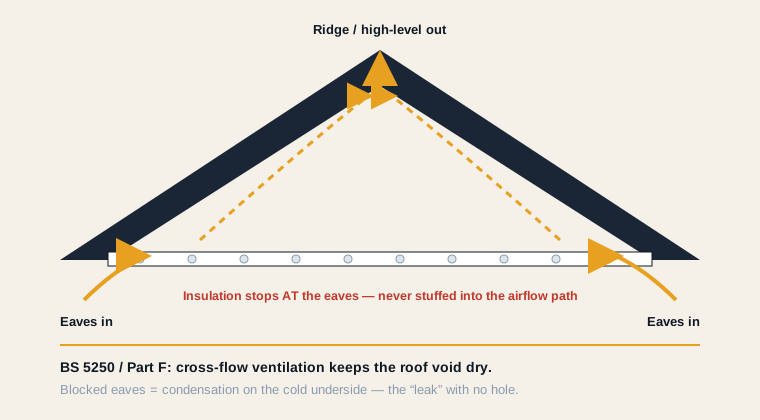
Roof void ventilation diagram showing airflow that keeps a roof dry
Roof Moss Treatment — technical reference
The process

From First Call to Sign-Off

1. Assessment

We check the extent of moss and the condition of the tiles underneath before touching the roof.

2. Quote

A fixed price for careful clearing and biocide treatment — never aggressive pressure washing.

3. Scheduling

Booked at a suitable dry window for treatment to work.

4. Manual clearing and treatment

Moss is scraped and brushed off by hand and a biocide applied that continues to kill regrowth over the following weeks.

5. Clean roof with prevention

Gutters and valleys cleared of shed moss, and advice on keeping it from returning.

Timescales

Job Durations at a Glance

JobTypical duration
Moss clearing (semi)half a day–1 day
Moss clearing + biocide1 day
Biocide treatment only2–4 hours
Clearing + gutter clear1 day
Large/detached roof1–2 days

Biocide needs a dry spell to work — we time treatment for suitable weather.

Access

Getting Safely onto Derby Roofs

Moss clearing is done carefully from ladders, a tower, or roof ladders; we never walk sound tiles unnecessarily. Scaffold is specified for: large or steep roofs where safe roof access is needed - always itemised in your written quote, never a hidden extra, and we arrange it.

Derby's mix of Victorian terraces, post-war estates and city-centre stock means access varies street by street, from tight terraced frontages to open estate roads. Pavement scaffold and skip permits go through Derby City Council; allow a few working days on streets like Sadler Gate, the Wardwick, Friar Gate where space is tight.

Pricing

Roof Moss Treatment Prices in Derby

JobTypical rangeNotes
Moss clearing (semi)£250–£500Manual, no pressure wash
Clearing + biocide£350–£700Continued kill
Biocide treatment only£150–£350Per roof
Clearing + gutter clear£350–£650Combined
Large/detached roof£500–£1,000Per scope

What moves the price

Worked example: Manual moss clearing and biocide on a north-facing semi in Allestree near the park — about £480.

No deposit on moss treatment — payment on completion. VAT included.

Covering DE1, DE21, DE22, DE23, DE24 and surrounding postcodes.

Guarantee

Your Guarantee, Explained

We guarantee the roof is cleared and treated properly; the biocide continues working for weeks, and we never pressure-wash, which strips the tile surface and shortens its life.

If a fault appears in covered work, we come back and put it right. No quibbling, no re-charge.

Good to know

Disruption, Mess & Weather

Low-disruption external work — some moss debris cleared from below, gutters flushed, and nothing left behind. You do not need to stay home for external work - we just need power and access agreed in advance.

Biocide treatment needs a few dry days to take effect; Derby's damp Derwent-valley air and shaded northern slopes make moss a recurring issue we treat to slow, not just clear. Derby's inland Midlands position brings genuine winter frosts and Derwent-valley humidity that slows drying.

Frequently Asked Questions

Manual removal and biocide treatment costs £400–£800 for a semi and £600–£1,200 for a detached house. Biocide-only treatment is £150–£400. Every visit includes a ridge, verge and gutter check.

No — we never pressure wash tiled roofs. It strips the tile's weathering surface, drives water under the laps and makes moss grow back faster. We use soft manual removal and biocide, the NFRC-recommended method.

It blasts off the factory surface of concrete tiles, leaving them more porous so moss returns faster and the tile life is shortened. It also forces water under the tile laps. Soft removal cleans without this damage.

Every 4–7 years depending on aspect and shade. North-facing slopes and roofs under tree cover in areas like Darley Abbey and Allestree need it more often; sunny, exposed roofs less. We advise a realistic interval for your roof.

Thick moss holds moisture, accelerates tile and mortar decay, and blocks valleys and gutters causing leaks. Thin moss on a sound roof isn't urgent. We assess honestly whether yours needs treating now or can wait.

Aspect — north and east-facing slopes never get the drying sun, so they hold moisture and grow moss first. It's common to see one slope green and the other clear on the same Derby roof. We treat the slopes that need it.

Soft manual removal of the moss, a biocide treatment to slow regrowth, and a check of the ridge, verge and gutters — because moss is often a symptom and the mortar and valleys underneath are what protect the roof.

Get Started

Free Quotes Across Derby

Free written quotes across Derby and Derbyshire. No obligation, no hidden costs, 10-year guarantee on all work.

0133 240 5131

Mon–Fri 8am–6pm · Sat 8am–2pm · 24/7 Emergency

More: How to Choose a Roofer · Storm Damage Repairs · Landlord Roofing · Commercial Roofing