Chimney repointing and stack maintenance across Derby — repointing, flaunching, cowls and capping, with lime mortar on period properties and correct-code lead flashings throughout.
Tell us the job in 30 seconds. No pushy sales, no call-out fee.
The chimney stack is the most exposed masonry on your house — it stands proud of the roof, catches the weather from every direction, and is often the first thing to deteriorate. Repointing renews the mortar joints in the brickwork once they have eroded, cracked or fallen out, stopping water getting into the stack and preventing the freeze-thaw damage that eventually loosens bricks. On a Derby stack, repointing costs from £150 for a small scope up to £800 or more for a full stack repoint with associated work.
Chimney work rarely comes alone. While repointing, we assess and where needed renew the flaunching — the mortar 'cap' that beds the pots into the top of the stack and sheds water — and the lead flashings where the stack meets the roof. Cowls to stop rain, downdraught or birds, and capping to seal a disused flue, are common additions. Doing these together under one scaffold is far more economical than separate visits to the same stack.
The single most important thing to get right on a period Derby chimney is the mortar. Victorian and older stacks were built with lime mortar, which is softer and breathable, allowing the masonry to release moisture. Repointing them with modern Portland cement — harder and impermeable — traps moisture in the brickwork, and in the freeze-thaw cycle that trapped water expands and spalls the face off the bricks. Cement pointing on a period stack does more damage than the eroded lime it replaced.
We use lime mortar on all of Derby's pre-1919 stacks as standard — the terraces of Friar Gate, Normanton, Peartree and Little Chester, and the older properties throughout the city. It is the correct specification, it lasts, and it protects the brickwork rather than destroying it. On modern stacks a cement or flexible mortar is appropriate. Matching the mortar to the age of the stack is basic competence, and it is exactly the detail cheaper operators get wrong.
Beyond the pointing, there are three jobs that keep a Derby stack sound. Flaunching is the sloped mortar bed at the top of the stack that holds the pots and sheds rainwater; when it cracks, water gets into the stack from above and the pots can loosen dangerously. Renewing the flaunching is a common part of stack maintenance and often the actual cause of a 'leaking chimney'.
Cowls fit onto the pots to solve specific problems: rain guards keep water out of an open flue, anti-downdraught cowls cure a smoking fire, and bird guards stop nesting. Capping seals the top of a disused chimney while keeping it ventilated, preventing damp without the drawbacks of blocking it entirely — a common job on Derby properties where the fireplace is no longer used but the stack is kept for appearance. We advise which of these your stack actually needs rather than fitting them as an upsell.
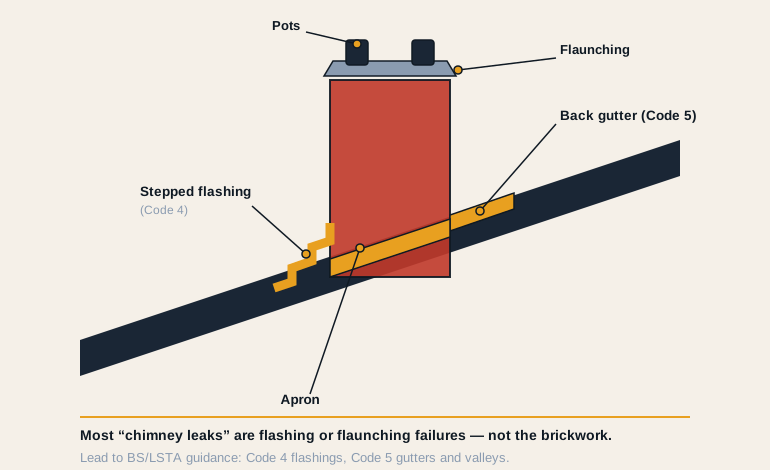
Chimney deterioration in Derby is driven by exposure, and the worst-affected stacks are the tall ones on the Victorian and Edwardian terraces — Friar Gate, Normanton, Peartree, Little Chester. These stacks stand high above the roofline, often shared between houses, built in soft Victorian brick with lime mortar, and after 100-plus years of Derby weather the pointing and flaunching have usually eroded. The prevailing south-westerly weather face takes the brunt, and it is typically the weather side of the stack that needs the most attention.
The mortar era matters as much as the exposure. Derby's pre-1919 stacks demand lime mortar, and using cement on them — as some cheaper jobs do — spalls the soft Victorian brick within a few freeze-thaw winters. The city's genuinely continental-leaning winters, with real frost cycles, make this failure faster here than in milder western regions. Getting the mortar right is not pedantry on a Derby period stack; it is the difference between a repoint that lasts decades and one that destroys the brickwork.
On the post-war estates — Mackworth, Sinfin, Chaddesden — the stacks are lower, in harder modern brick, and many serve fireplaces that are no longer used. Here the common jobs are capping disused flues to stop damp while keeping ventilation, and dealing with flaunching that has cracked with age. Different stock, different stack problems — and knowing which era you're dealing with is what gets the specification right first time.
Fixed prices including scaffold access. Lime mortar on period stacks as standard. Flaunching, cowls and capping itemised so you see exactly what you're paying for.
Chimney work at height requires scaffold or a MEWP under the Work at Height Regulations 2005; period stacks require breathable lime mortar rather than cement to avoid spalling the brickwork.Source: Building Regulations; NFRC guidance; Work at Height Regulations 2005
Lime mortar on period stacks, correct-code lead, and flaunching, cowls and capping itemised — all under one scaffold.
☎ Call 0133 240 5131Full repoint and new flaunching on our Victorian stack in Normanton. Lime mortar, correct lead flashing. Another firm had quoted cement — glad we didn't use them.
The 'leaking chimney' turned out to be cracked flaunching, not the pointing. They diagnosed it properly and fixed the actual problem on our Peartree terrace.
Capped a disused flue on our Mackworth semi — kept it ventilated to stop damp. Explained exactly what was needed, no upsell.
Repointing renews the mortar joints on a weathered chimney stack. On Derby's Victorian terraces the original lime mortar is often washed out and porous, letting water into the stack and the rooms below.
When it is not the answer: If the brickwork itself has spalled and failed, repointing alone will not fix it — the affected courses need rebuilding, which we will identify honestly Read the full guide.
We assess the depth of mortar loss and the condition of the bricks behind it.
A fixed price to rake out and repoint, in mortar matched to the building's age.
Safe standing time at the stack is arranged.
Failed mortar is raked out to a sound depth and repointed — lime mortar on pre-1919 stacks, matched for colour and permeability.
The stack is left weathertight with a clean, correct finish.
| Job | Typical duration |
|---|---|
| Repoint a single stack | 1–2 days |
| Repoint + reflash | 1.5–2.5 days |
| Repoint + rebuild flaunching | 2 days |
| Lime repoint (heritage stack) | 2–3 days |
| Assessment only | 1–2 hours |
Fresh mortar must not freeze or dry too fast — we time repointing for mild, dry conditions.
Repointing a stack needs scaffold or a secure tower for the standing time the work takes. Scaffold is specified for: all stack repointing — it cannot be done safely or well from a ladder - always itemised in your written quote, never a hidden extra, and we arrange it.
Derby's mix of Victorian terraces, post-war estates and city-centre stock means access varies street by street, from tight terraced frontages to open estate roads. Pavement scaffold and skip permits go through Derby City Council; allow a few working days on streets like Sadler Gate, the Wardwick, Friar Gate where space is tight.
| Job | Typical range | Notes |
|---|---|---|
| Repoint a single stack | £600–£1,200 | Age-matched mortar |
| Repoint + reflash | £850–£1,600 | Lead renewed |
| Repoint + rebuild flaunching | £800–£1,400 | Pots reset |
| Lime repoint (heritage) | £900–£1,800 | Conservation stacks |
| Assessment | Free | With quote |
Worked example: Lime repointing a heritage stack on a Friar Gate townhouse — about £1,450 including scaffold and matched mortar.
Staged payment on larger jobs, balance on completion. No large deposit. VAT included.
Covering DE1, DE21, DE22, DE23, DE24 and surrounding postcodes.
Repointing is guaranteed for workmanship; matched lime or cement mortar is specified correctly for the stack's age so the repair lasts decades, not years.
If a fault appears in covered work, we come back and put it right. No quibbling, no re-charge.
Scaffold around the stack, some dust during raking out (contained and sheeted), and a clean finish left behind. You do not need to stay home for external work - we just need power and access agreed in advance.
Repointing needs dry, frost-free conditions to cure; on Derby's heritage stacks we use lime mortar, which is especially weather-sensitive while it sets. Derby's inland Midlands position brings genuine winter frosts and Derwent-valley humidity that slows drying.
A small or partial repoint costs £150–£400 and a full stack repoint £400–£800 or more. Flaunching renewal is £200–£450 and lead flashing £250–£600. Scaffold access is included in the fixed price.
On all pre-1919 stacks, yes — lime mortar is breathable and correct for period brickwork. Cement traps moisture and spalls soft Victorian brick in freeze-thaw winters. Modern stacks use cement or flexible mortar.
Flaunching is the sloped mortar bed at the top of the stack that holds the pots and sheds water. When it cracks, water gets in and pots loosen. It's a common cause of a 'leaking chimney' and often needs renewing with a repoint.
Common causes are eroded pointing, cracked flaunching, or failed lead flashing where the stack meets the roof. We diagnose which it actually is rather than assuming — often it's the flaunching or flashing, not the pointing.
Yes — we cap disused flues while keeping them ventilated, which stops rain and damp without the condensation problems of fully blocking a flue. It's a common job on Derby estate properties with unused fireplaces.
Repointing renews the mortar joints in the stack brickwork. Chimney repairs is the broader service covering rebuilds, flashing and structural work. Repointing is often part of a repair, and we advise which you need.
Yes — chimney work is at the highest, most exposed point of the roof and requires scaffold or a MEWP under the Work at Height Regulations 2005. Ladder-only chimney work is unsafe. Scaffold is included in our fixed price.
Free written quotes across Derby and Derbyshire. No obligation, no hidden costs, 10-year guarantee on all work.
0133 240 5131Mon–Fri 8am–6pm · Sat 8am–2pm · 24/7 Emergency