Derby has a number of designated conservation areas, and two in particular — Darley Abbey and the Friar Gate area — contain a high density of residential properties where roofing work requires careful consideration of both planning rules and appropriate materials. Getting this wrong means enforcement action from the council and remediation at your own cost. Getting it right means a repair or replacement that preserves your property’s character and its market value.
Darley Abbey Conservation Area
Darley Abbey is one of Derby’s most significant conservation designations — a Georgian mill village built largely by the Evans family from the late 18th century that survives almost entirely intact. The housing stock is predominantly early 19th century sandstone cottages and mill-workers’ houses with Welsh slate roofs. Listed building status is common throughout the village.
The conservation area designation exists to preserve the character of the village as a whole. For roofing purposes, this has three practical implications:
- Materials must match the original. Welsh slate is the correct roofing material for Darley Abbey properties. Replacing with concrete tile, plain concrete or modern clay is not acceptable in a conservation area context and would require planning permission that is unlikely to be granted.
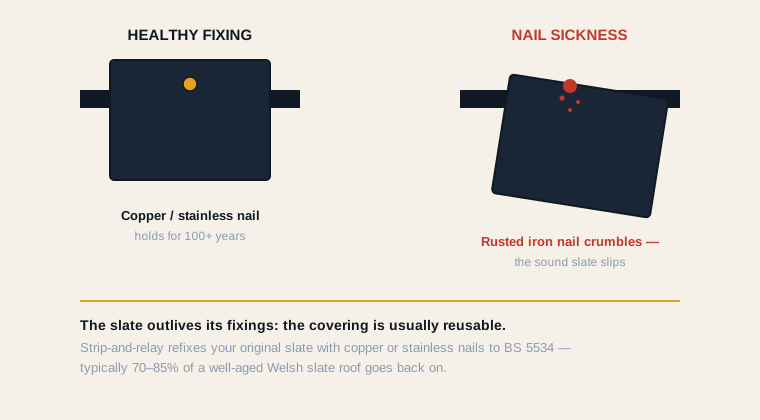
- Reclaimed is preferable to new. Modern Welsh slate is available but the colour and texture profile differs from 19th-century material. For prominent elevations, reclaimed slate sourced to match the original is the correct specification. We source Westmorland and Welsh reclaimed slate for Darley Abbey properties as standard.
- Mortar must be lime-based. Cement mortar is not appropriate for repointing the sandstone masonry or the ridge and chimney work on Darley Abbey properties. Lime mortar — the correct specification for pre-1919 masonry — is breathable, flexible and sympathetic to the original structure. Using cement mortar on historic sandstone accelerates decay by trapping moisture.
Friar Gate Conservation Area
The Friar Gate area covers one of Derby’s most architecturally significant streets — a Georgian and early Victorian townscape with some of the finest period residential architecture in the East Midlands. The conservation area extends beyond Friar Gate itself to include many of the surrounding streets. Properties here are predominantly Georgian and early Victorian brick with Welsh slate roofs, significant chimney stacks and period lead work.
The same principles apply as Darley Abbey: matched materials, lime mortar, and maintenance of the character of the original. Friar Gate properties are also common subjects of Article 4 Directions, which remove certain permitted development rights and require planning permission for changes that would normally be permitted development — including roofing material changes. If you’re unsure whether your Friar Gate property has an Article 4 Direction in place, check with Derby City Council planning before commissioning any re-roofing work.
What Requires Planning Permission
Most like-for-like roofing repairs — replacing damaged slates with matching material, repointing ridges and verges in lime mortar, replacing lead flashings — are considered maintenance and do not require planning permission even in conservation areas. What requires permission in a conservation area:
- Changing the roofing material (e.g. replacing slate with tile)
- Altering the roof profile or adding dormers or rooflights
- Altering or removing chimney stacks on listed buildings
- Any work covered by an Article 4 Direction
Listed building consent (separate from planning permission) is required for any works affecting the character of a listed building, including internal works. For listed properties in Darley Abbey or Friar Gate, it’s worth checking listed building status before any significant work begins.
Practical Advice
The conservation rules in Derby’s protected areas are not there to make your life difficult — they exist to protect the character and value of some of the city’s most architecturally significant housing. A properly executed like-for-like repair in matched reclaimed slate with lime mortar costs more than a quick repair in concrete tile, but it maintains the property’s character, its value in a market that strongly favours period authenticity, and its compliance with the planning framework that protects it.
We’re familiar with the requirements of both conservation areas and work regularly in Darley Abbey and around Friar Gate. If you’re uncertain about what’s required for a particular job, call us for a free assessment — we’ll give you a clear view of what’s needed before you commission anything.
Need a Roofer in Derby?
Free quotes, no call-out fees, 10-year guarantee on all work.
☎ Call 0133 240 5131