The Most Common Causes of Roof Leaks During Rain in Derby
Failed Lead Flashings at Chimney Stacks
The most frequent source of active roof leaks on Derby's Victorian and Edwardian properties is lead flashing failure at the chimney stack — either the step flashings on the chimney face or the apron flashing at the base. The tell-tale sign: dampness appearing on the chimney breast inside the property during or after heavy rain, often several metres below the roof. Water entering at the chimney base tracks down the masonry before appearing inside, so the visible damp is not directly below the leak source.
Slipped or Broken Tiles
On Derby's concrete tile estate properties — Normanton, Chaddesden, Mackworth and similar — slipped or broken tiles are a common rain leak source. The tile below the slipped one is exposed to direct rainfall. The leak typically appears as a drip or wet patch on the ceiling directly below the affected tile. Drip location is a reliable guide to the source with tile displacement leaks — unlike flashing leaks where the source is often several metres from the visible damp.
Failed Valley Linings
Valley failures are frequent on Derby properties with hipped or multi-pitch roofs. A lead valley that has cracked or lifted at a junction, or a mortar-pointed tile valley where the mortar has failed, allows water to run behind the valley lining and into the roof void. Valley leaks typically appear as long linear damp patches on upper floor ceilings, tracking the line of the valley above.
Blocked or Failed Guttering
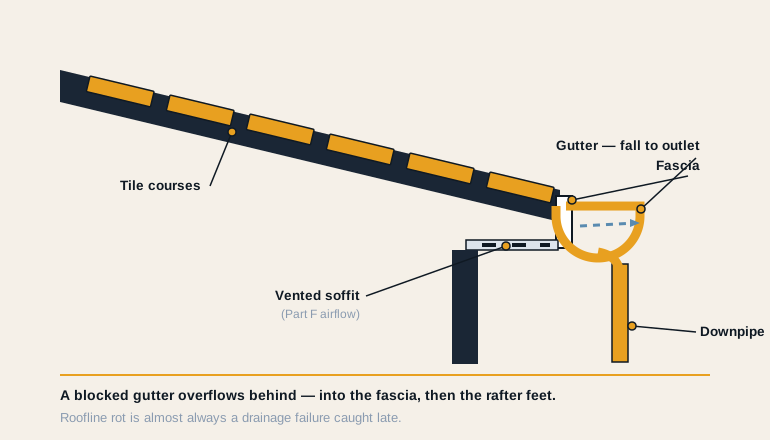
Overflowing guttering is frequently misidentified as a roof leak. Water overflowing at a blocked outlet runs down the fascia, saturates the fascia timber, wicks behind the soffit and appears as damp on the ceiling near the eaves. It looks like a roof leak but is a guttering problem. The distinguishing test: does it only appear during very heavy rain (suggesting overload at a partial blockage) or during all rainfall (suggesting a fascia/soffit issue)?
What to Do Immediately
If water is actively dripping, place containers and protect valuables. If the drip is near or onto electrical fittings, switch off the affected circuit at the consumer unit — do not restore power until the fitting has been assessed by an electrician after the leak is fixed. Do not attempt to access the roof yourself. Photograph everything from safe ground-level and internal positions before any repair work is carried out — this documentation supports any insurance claim.
When to Call an Emergency Roofer in Derby
Call immediately if: water is reaching electrical fittings, the volume of water suggests structural failure rather than a single tile displacement, or you can hear water moving within the ceiling void (indicating a significant ingress point). For a single drip from an isolated patch that is contained and away from electrics, a same-day call in normal working hours is appropriate rather than an out-of-hours emergency call. Call Derby Roofing Experts on 0133 240 5131 — we'll assess over the phone whether you need emergency response or a planned visit.
Need a Roofer in Derby?
Free quotes, no call-out fees, 10-year guarantee on all work.
☎ Call 0133 240 5131Questions & Answers
Light rain may not generate enough volume to overwhelm a small gap. Heavy rain or driving rain creates higher pressure at the failure point. The most common causes of rain-volume-dependent leaks are: partially displaced tiles, failed pointing on ridge or verge, and guttering that overflows when flow rate exceeds capacity.
From inside: check the loft for daylight, moisture staining on felt or rafters, or active drips — the drip location in the loft is closer to the source than the damp patch on the ceiling below. From outside: look from ground level for displaced ridge tiles, visible gaps in pointing, or valley debris. For precise diagnosis, professional assessment from scaffold height is required.
Ground-level and loft-level inspection is safe. Getting on the roof is not — falls from roofs are a leading cause of fatal DIY accidents. Any repair requiring access to the roof surface should be carried out by a professional.
Sudden and unforeseen roof damage (storm-caused tile displacement, branch impact) is generally covered. Gradual deterioration and maintenance failures are not. An insurer may dispute a claim if the cause is pre-existing wear rather than a sudden event. We provide written damage reports distinguishing storm-caused failure from pre-existing deterioration.
For genuine emergencies we aim to reach Derby within 2–4 hours, 24/7. For non-emergency leaks we typically schedule an inspection within 1–3 working days. Call 0133 240 5131 to assess urgency.
Depends on the cause. Single slipped tile: £150–£300. Lead flashing failure: £400–£900. Valley failure: £500–£1,200. Guttering repair: £100–£400. Free survey and fixed quote before any work starts.
Temporary measures to stop water entering while a permanent repair is assessed — storm covers, EPDM liquid membrane, lead flashing temporary repair. We carry these materials on every van. Emergency weatherproofing costs from £150 and prevents further damage accumulating.