Is It a Roof Leak or Something Else?
The Timing Test
A damp patch that appears during or immediately after rainfall and dries out between rain events is almost certainly water ingress — either from the roof or from a defective external wall element. A patch that remains persistently damp regardless of weather, or that is worse in winter mornings regardless of rain, is more likely to be condensation. A patch that appears after the property above you uses plumbing (if you're in a flat or terrace with upstairs neighbours) is likely a plumbing leak rather than roof ingress.
The Location Test
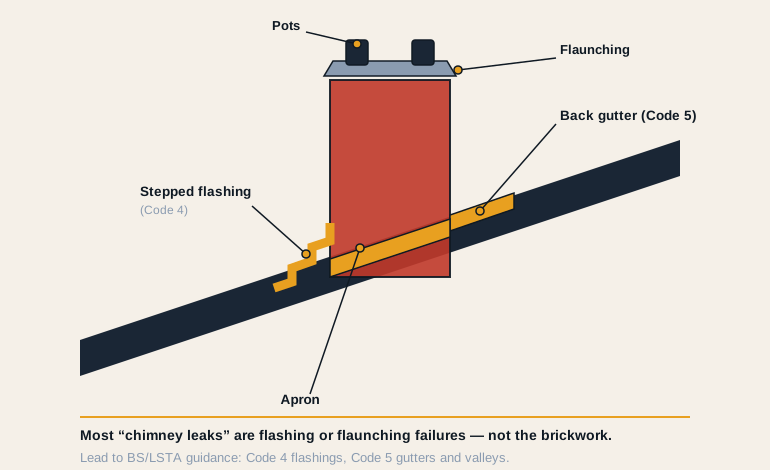
Where on the ceiling the damp patch appears gives strong clues about the source. A patch directly below a chimney breast that appears during rain is almost certainly a chimney flashing or stack problem. A patch near the eaves on a top floor ceiling is often guttering overflow saturating the fascia rather than a roof tile failure. A patch in the centre of a top floor ceiling is more likely a tile displacement, valley failure or felt tear. A patch on a lower floor ceiling in a two-storey property after rain is rarely a roof problem — an internal plumbing leak or condensation in a cold void is more likely.
The Loft Check
Before calling anyone, go into the loft. Look for: daylight visible through the roof structure, active drips on the underside of the felt or from the felt, moisture staining on rafters or felt, or areas where felt has sagged and is holding water. This check often identifies the source more precisely than any external ground-level inspection and avoids unnecessary survey costs.
Condensation vs Water Ingress in Derby
Condensation-related damp patches on Derby ceilings are frequently misidentified as roof leaks. The pattern: damp patches appear in cold weather on north or east facing upper floor ceilings, are not associated with specific rainfall events, and may have a slightly fuzzy or spreading edge rather than the sharp wet stain of an active drip. The cause is warm moist air from the occupied space below condensing on a cold ceiling surface. In Derby properties with inadequate loft insulation or a poorly ventilated roof void, this can cause significant moisture accumulation on ceiling surfaces that looks identical to a roof leak.
The test: open a loft hatch and check whether the felt and rafters are wet. If they are dry and there is no evidence of water ingress, and the damp patch appears regardless of weather but is worse in cold settled weather, condensation is the more likely cause. If the loft shows active moisture on the felt, investigation of the roof covering is warranted.
What to Do Next in Derby
If the loft check shows active moisture or daylight, call for a professional survey. If the loft is dry and the pattern suggests condensation, improving ventilation through the soffit or adding a vapour control layer beneath the loft insulation is the appropriate remedy — not a roofing repair. If you're unsure, call Derby Roofing Experts on 0133 240 5131 and describe what you've found. We'll advise whether a professional survey is warranted or whether the likely cause is something else.
Need a Roofer in Derby?
Free quotes, no call-out fees, 10-year guarantee on all work.
☎ Call 0133 240 5131Questions & Answers
Key indicators it's roof ingress: appears during or after rain, visible moisture or daylight in the loft, patch is directly below a chimney or near the centre of a top floor ceiling. Key indicators it's not: appears regardless of weather, loft is dry, patch is on a lower floor or near plumbing fixtures.
Yes — guttering overflowing onto the fascia saturates the timber, wicks behind the soffit, and appears as damp on the ceiling near the eaves. This is one of the most commonly misidentified roof leaks. The fix is guttering repair, not roofing work.
Condensation: appears regardless of rain, worse in cold weather, loft is dry, slightly fuzzy spreading edge. Roof leak: appears during or after rain, loft shows moisture or daylight, patch has a sharp wet edge or active drip. Many Derby homes have both simultaneously.
A professional roof survey in Derby costs £150–£200 and includes written findings with photographs. If it turns out to be a condensation issue rather than a roof problem, we'll tell you honestly and save you the cost of unnecessary roofing work.
A surface moisture meter will confirm whether the ceiling material is wet but won't identify the source. Loft inspection and, if needed, professional survey from scaffold height is required to locate the ingress point.
Unlikely, unless the property is a bungalow or single-storey extension. On a two-storey Derby property, a ground floor damp patch after rain is more likely internal plumbing, a defective external wall cavity or window seal, or rising damp — not roof ingress.
We typically schedule non-emergency surveys within 1–3 working days. For active significant leaks we aim to attend within 2–4 hours. Call 0133 240 5131 to arrange.