September — Pre-Winter Inspection
September is the most valuable maintenance month for Derby homeowners. Conditions are good for access if work is needed, the summer's thermal stress has revealed any developing failures, and there's time to carry out repairs before the freeze-thaw season begins. Look at the ridge line from the pavement — uneven tiles, visible gaps in pointing, or displaced ridge tiles are all signs that warrant a professional inspection before winter.
November — Post-Leaf-Fall Gutter Clear
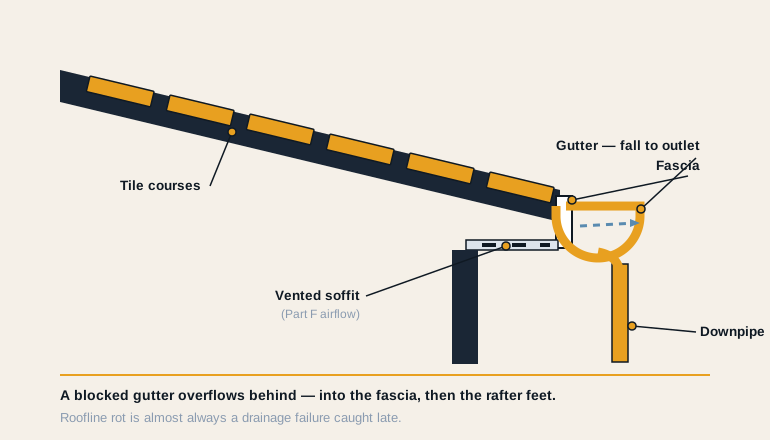
The single most cost-effective roof maintenance action in Derby is a gutter and valley clear in November, immediately after peak leaf fall. A blocked valley heading into Derby's wet winter causes more damage than any other neglected maintenance item. Properties in Allestree, Darley Abbey and Borrowash, adjacent to significant woodland, need this most urgently.
February — Post-Frost Assessment
February, after the main frost season has passed, is the time to check whether the winter has created any new issues. Freeze-thaw cycling works on open mortar joints and cracked flashings — what was a minor crack in October may have opened significantly. Another ground-level ridge and valley check, plus a loft inspection for new damp patches, is worthwhile.
May — Moss and Annual Overview
May is right for moss assessment and any minor repair work needing good conditions. Moss biocide applied in spring gives the product time to work through the growing season, with winter rainfall washing the dead material off naturally.
What to Leave to the Professionals
Ground-level inspections with binoculars are safe. Getting on the roof is not. Falls from roofs are among the most common fatal DIY accidents. Call Derby Roofing Experts on 0133 240 5131 to arrange any professional inspection.
Derby-Specific Weather Patterns and Your Roof
Derby's position at the southern edge of the Pennines gives it a specific weather character. Westerly weather systems track in from the Irish Sea and deposit significant rainfall on the western-facing slopes and suburbs of the city — Mickleover, Littleover and Mackworth receive more wind-driven rain than the more sheltered eastern suburbs of Chaddesden and Spondon. Properties on high ground at Allestree and the Darley Abbey ridge face the most exposure. Understanding which micro-position your Derby property occupies helps determine whether a 4-year or 7-year maintenance interval is appropriate for your specific roof.
When to Call Us Rather Than Monitor
Our general rule for Derby homeowners: if you can see a problem from the ground, it is beyond the monitoring stage. Visible ridge tile movement, open mortar joints wide enough to insert a finger, or lead flashings that have visibly separated from their abutments all require professional assessment, not continued monitoring. The cost of a professional survey is modest relative to the water damage that can occur from a winter of unchecked water ingress. Call us when you're unsure — a quick conversation costs nothing and we'll tell you honestly whether you need us out or whether it can wait.
The Cost of Getting the Timing Wrong in Derby
The financial case for seasonal maintenance in Derby is straightforward. A ridge repoint carried out in September as planned maintenance on a 3-bed semi costs £400–£600. The same ridge tile displacement addressed as a January emergency after storm damage — with water having entered the roof void for several wet weeks — costs the same for the repair but adds potential ceiling replastering (£200–£800), redecorating (£300–£600), and possibly electrical work if water has reached fittings. The repair cost is identical; the consequential damage multiplies the total bill two or three times. Pre-winter maintenance is not a precautionary luxury — it is the most economical roofing decision available to most Derby homeowners.
Who Should Carry Out the Inspections
Ground-level checks and loft inspections are safe for homeowners to carry out themselves. Any inspection requiring access to the roof surface should be carried out by a professional from a scaffold platform. Falls from roofs are among the most common fatal DIY accidents in the UK. The ground-level check takes ten minutes with binoculars and catches the most common visible failure indicators. The loft inspection takes fifteen minutes and provides early warning of water ingress that hasn't yet appeared on ceiling surfaces. Together, these two checks cost nothing and address the majority of developing issues before they become expensive emergencies.
Need a Roofer in Derby?
Free quotes, no call-out fees, 10-year guarantee on all work.
☎ Call 0133 240 5131Questions & Answers
September and October for planned repairs — good conditions and time before frost season. Spring for non-urgent work when contractors are less busy.
Once annually in November for properties without significant tree cover. Twice yearly (spring and autumn) for properties adjacent to woodland.
Look for daylight through the roof structure, moisture staining on felt or rafters, water drips from the felt, and any frost formation on cold mornings.
Ground-level inspection from the pavement with binoculars is safe. Do not get on the roof — any issues found should be professionally assessed from scaffold height.