1. Ridge Line Ground Check
From the pavement, look at the ridge line along the full roof length. It should be a straight, consistent line. Uneven tiles, any visible lateral displacement, or gaps in pointing indicate mortar failure requiring a professional inspection before winter.
2. Valley and Gutter Check During Rain
The next time it rains, check that gutters and downpipes are flowing freely. Water overflowing at a fixed point means a blockage downstream. Either condition should be resolved before winter rainfall arrives in volume.
3. Chimney Inspection from Ground Level
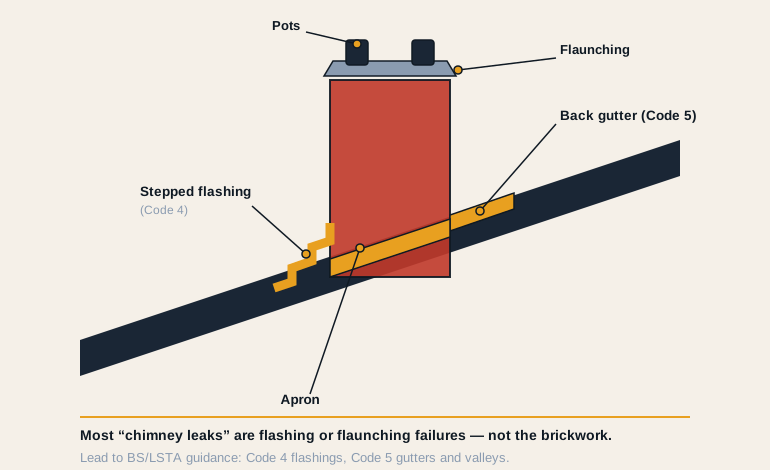
With binoculars: look for open mortar joints between bricks, cracked or missing flaunching at the top, and lead flashings that appear lifted rather than lying flat. Any visible issues should be addressed before frost cycles begin.
4. Loft Inspection
Go into the loft on a dry day. Look for: daylight through the roof structure, moisture staining on felt or rafters, any soft areas of sarking board. Repeat after the first significant autumn rainfall — new wet patches indicate a point of ingress.
5. Flat Roof Check
For flat-roofed garages or extensions, check for ponding water 48 hours after rain (drainage fall problem), blisters, cracked seams, or lifted membrane at edges. These are failure points under freeze-thaw cycling.
6. Fascia Condition
Check guttering brackets are holding firm and not pulling away from fascia boards. Any bracket that moves under hand pressure indicates soft timber behind it — a sign of water ingress damage that will worsen over winter.
7. Book the Gutter Clear
For any Derby property with significant tree cover, book a gutter and valley clear for November. This is the single most cost-effective autumn maintenance action available.
8. Schedule Any Required Repairs
Issues found in checks 1–6 should be scheduled for October repair where possible. October repairs are planned at standard rates. The same repair in January is an emergency call-out in difficult conditions at premium cost. Call Derby Roofing Experts on 0133 240 5131 to schedule.
The Cost Comparison: October Repair vs January Emergency
A ridge tile repoint carried out in October as a planned repair on a standard Derby semi costs approximately £400–£600 with a scheduled scaffold programme. The same repair carried out as an emergency call-out in January — after a displaced tile has allowed water ingress over several wet weeks — involves the repair itself plus the cost of any internal damage remediation: ceiling replastering, redecorating, and potentially electrical work if water has reached fittings. The repair cost is the same; the consequential damage cost can be several times larger. October prevention is the most cost-effective roofing decision most Derby homeowners make all year.
What a Professional October Inspection Covers in Derby
A professional pre-winter roof inspection in Derby covers everything that a ground-level check cannot: tile condition across the full roof surface, mortar bond at every ridge tile, lead flashing condition at all chimney abutments and valleys, valley lining condition, fascia and soffit condition at eaves, and a loft space inspection for moisture evidence. The inspection takes 45–90 minutes and is provided free as part of any repair quote. You receive a written report with a priority grading on any issues found — immediate action required, within 12 months, monitor, or no action. This is the information you need to make a cost-effective decision about what to address before winter and what can wait.
Booking October Repairs in Derby: Timing and Availability
October is the busiest month of the year for Derby roofing contractors. Demand peaks as homeowners who have been monitoring issues through summer decide to act before winter, and as surveyors flag roof concerns on properties going through autumn sales. The practical implication: contractors who are good and busy will have October diaries that fill up by mid-September. Booking in late October for October work may mean waiting for November. For planned maintenance — ridge repoints, guttering replacement, moss treatment — booking in August or September for an October slot secures the timing you want. For genuine emergencies we maintain capacity for same-day response year-round, but for planned work earlier booking is always better.
After the Inspection: Prioritising What Needs Doing
Not every issue identified in an autumn inspection needs immediate action. The priority framework is simple: anything allowing water ingress or at risk of allowing water ingress before winter needs addressing in October. Ridge mortar that is cracking but hasn't yet produced displacement is urgent but can typically wait 2–3 weeks for a scheduled repair. Moss growth, however thick, is not an immediate water risk and can be treated in October or deferred to spring. Guttering that needs clearing goes onto the November list. Fascia boards that are soft but not yet structurally failed can be scheduled for spring when conditions are better for this type of work. We provide this priority assessment in writing after every Derby roof inspection, so you have a clear action plan rather than a list of concerns without context.
Need a Roofer in Derby?
Free quotes, no call-out fees, 10-year guarantee on all work.
☎ Call 0133 240 5131Questions & Answers
October — after summer heat but before the first frosts. This maximises time for repairs before the freeze-thaw season.
Ground-level inspection with binoculars for ridge, chimney and tile checks. Loft inspection covers underside condition. Any issues should be professionally assessed from scaffold — not from a ladder.
For 1960s–70s estate properties in Normanton, Chaddesden and Mackworth: ridge and verge mortar inspection. For all properties with tree cover: gutter and valley clearing.
We typically schedule non-emergency repairs within 2–3 weeks in October. November onwards the schedule fills faster as storm season progresses. Book early in October.